- Your cart is empty
- Continue Shopping

Uncategorized
A short (but rich) history of drinking glasses — and the oldest makers still competing today
-
By uribax
- Posted on
- 0 comments
From rough beads and clay cups to blown wine stems and sparkling crystal, the drinking glass is both a technological story and a social one: how people made, drank, showed status, celebrated and innovated over five millennia.
Beginnings: lapis, beads and early glass (≈ 3500–1st century BCE)
Glass first appears in the archaeological record in the ancient Near East and Egypt around 3,500–5,000 years ago — initially not as clear drinking vessels but as colored beads, inlays and small containers that imitated precious stones. Early techniques produced opaque and colored glass used for ornament and ritual objects long before everyday clear drinking vessels were common. Suntory+1
The Roman revolution: blown vessels and mass use (1st century BCE – 5th century CE)
The invention and spread of glassblowing in the eastern Mediterranean (Hellenistic and Roman periods) transformed glass from luxury art into everyday tableware. Romans made blown bowls, cups and bottles in huge quantities; archaeologists find Roman glassware across the empire, showing how glass moved from elite funerary or decorative use to ordinary domestic drinking and storage. Wikipedia+1
Medieval to Renaissance: Venice, Murano and the craft identity (c. 8th century – 17th century)
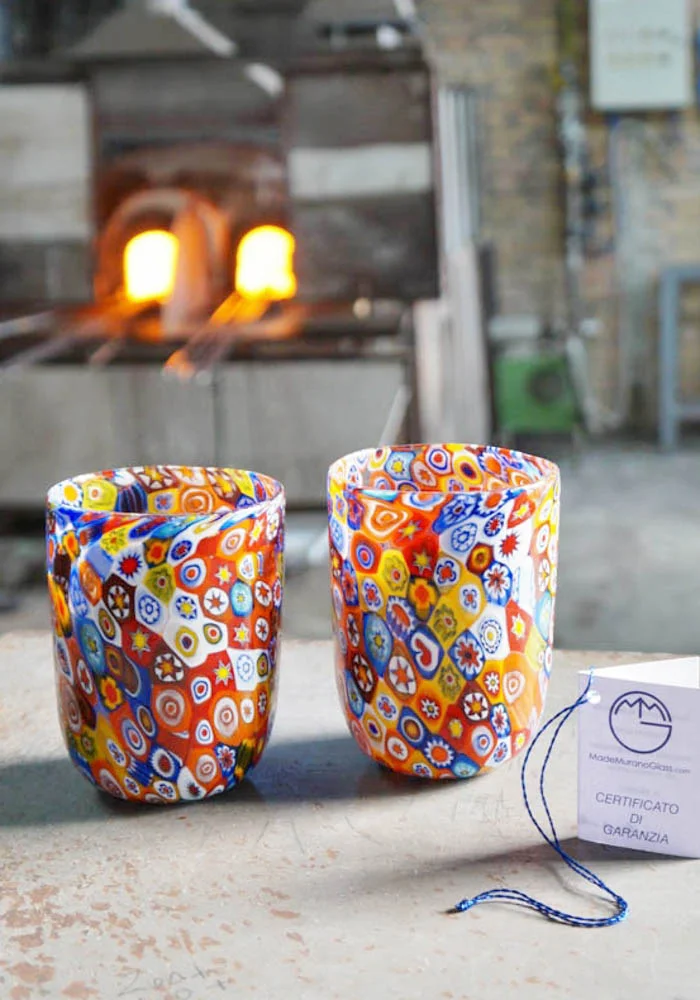
Venice — and, from about the 13th century onward, the island of Murano — became Europe’s premier glassmaking center. Venetian artisans refined techniques (murrine, millefiori, cristallo) and, because glassmaking furnaces were both fire and smoke hazards, the Venetian authorities concentrated and protected the industry on Murano. Murano’s families (some tracing craftsmanship centuries back) became the guardians of complex skills and design. glassofvenice.com+1
Lead crystal, fine stemware and the luxury market (17th–19th centuries)
In the 17th–18th centuries European innovation and royal patronage produced the luxury “crystal” industry: clearer, brighter leaded glass and cut crystal. New manufactories were founded across Europe (e.g., Baccarat in France), serving courts and wealthy patrons with elaborate stemware and chandeliers. Wikipedia+1
Industrialization: machines, mass production and new markets (19th–20th centuries)
The Industrial Revolution and later mechanization changed drinking-glass production. Pressed glass and machine-made tumblers made glassware affordable and standardized; at the same time, established ateliers and luxury brands continued producing mouth-blown, handmade pieces for high-end markets. Companies grew, moved and adapted — some becoming global players in both everyday and luxury categories. libbey.com+1
Top, long-lived glassmakers and “competitors with long age”
Below are notable manufacturers and traditions that have long histories and remain influential in drinking glass markets (wine, spirits, tableware, luxury crystal, and art glass). I list founding/early dates and a short note about why they matter.
- Riedel (1756 — Austrian / Bohemian roots)
Famous for wine-specific stemware (glass shape designed to influence aroma/taste). The Riedel family business traces to 1756 and is still a leading name in specialized wine glass design. Riedel+1 - Baccarat (1764 — France)
One of Europe’s great crystal manufactories, founded under royal permission in 1764; noted for luxury stemware, decanters and chandeliers. Baccarat represents the high-luxury end of the crystal market. Wikipedia+1 - Waterford (1783 — Ireland)
Waterford crystal (Penrose glassworks, 1783) became internationally famous for cut crystal stemware. The brand has had ups and downs but remains iconic for luxury drinking glassware. waterford.com+1 - Stoelzle / Stölzle (1805 / 1889 — Austrian / German group)
With roots in early 19th-century Austrian glassworks and an important Lausitz (Weißwasser) plant from 1889, Stölzle is now a major European producer of high-performance lead-free crystal tableware and commercial glassware. Stoelzle Glass Group+1 - Libbey / New England Glass Company lineage (1818 / US)
The New England Glass Company (1818) is the ancestor of the Libbey story; Libbey became a major American maker of tableware and mass-market glass. Libbey exemplifies the industrial, consumer-focused side of the glass trade. libbey.com+1 - Baccarat, Waterford and other long-standing crystal houses (collectively)
Many European houses founded in the 18th–19th centuries (Baccarat, Waterford, other French and Bohemian firms) set standards for cut crystal and luxury tableware. Wikipedia+1 - Murano families and ateliers — Seguso, Venini, others (tradition from 1300s; firms 20th century)
Murano’s glassmaking tradition dates back to medieval times; specific family names like Seguso trace glassmaking claims to the late 1300s (family records), while firms such as Venini (founded 1921) are 20th-century companies that revived and modernized Murano craft for the luxury and art markets. Murano represents continuity of craft, artistry and family-run lineages. seguso.com+1 - Other historically significant players
Many regional and national firms (Bohemian/Czech glassmakers, German Lausitz factories, American makers) contributed to the glass-making ecosystem over centuries; some specialized in bar ware and highly durable glasses (for instance, East German innovations in tough “Superfest” glass in the 20th century). Wikipedia+1
Why some names survived and still compete
- Specialization and innovation — e.g., Riedel rethought wine glass shapes; other firms innovated materials (lead crystal, lead-free crystal, machine-pressed vs mouth-blown). Riedel+1
- Brand & luxury positioning — Baccarat and Waterford survived as luxury brands that customers buy for status, gifts and design. Wikipedia+1
- Scale & industrial agility — companies like Libbey and Stölzle scaled machine production to serve hotels, restaurants and retail. Wikipedia+1
- Craft continuity — Murano families and ateliers sustained artistic techniques that the luxury and collector markets prize. seguso.com+1
Quick timeline (very condensed)
- ≈ 3500–1500 BCE: earliest glass beads and small objects. Suntory
- 1st century BCE – 4th century CE: Roman glassblowing spreads functional glassware. Wikipedia
- Medieval – Renaissance: Venice/Murano rises as Europe’s glass hub. glassofvenice.com
- 18th century: European crystal manufactories (Baccarat 1764, Waterford roots 1783). Wikipedia+1
- 19th–20th centuries: industrialization and founding or growth of major firms (Libbey lineage, Stoelzle, Riedel’s ongoing dynasty). Wikipedia+2Stoelzle Glass Group+2
